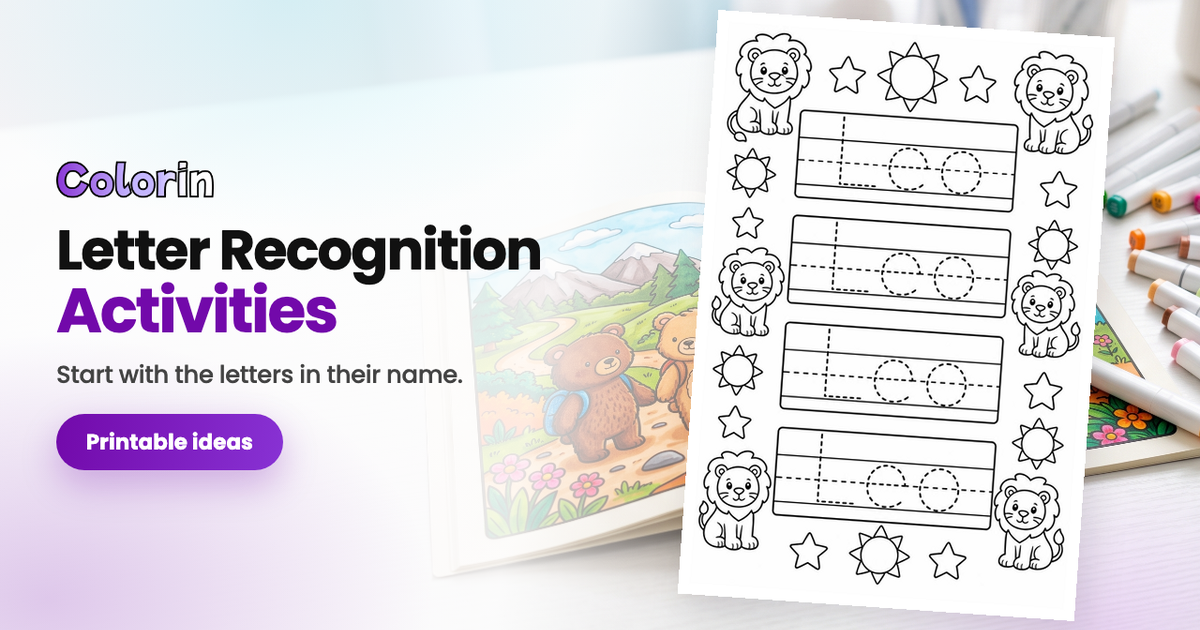
A name tracing sheet helps a child learn one of the first words they can write: their own name. How well preschoolers write their name is one of the top three predictors of how well they read and write in school. Start with the first letter of their name instead of A, since they already see that letter every day.
Below are seven letter recognition activities with printable sheets. They work for a child at home, a whole class or a printable pack you sell.
1. Trace the Name With Drawings They Love
Tracing teaches the hand the shape of each letter, but it's only a first step. In a 2012 brain study, four- and five-year-olds learned letters by writing them freehand, tracing them or typing them. When they saw the letters again, the brain's reading areas responded more to the ones they had written freehand than to the ones they had traced or typed. So once the dots feel easy, have them write their name on the back, without the dots.
Colorin's generator has three tabs, and this guide uses all three: Scenes & characters, Words & names and Activities.
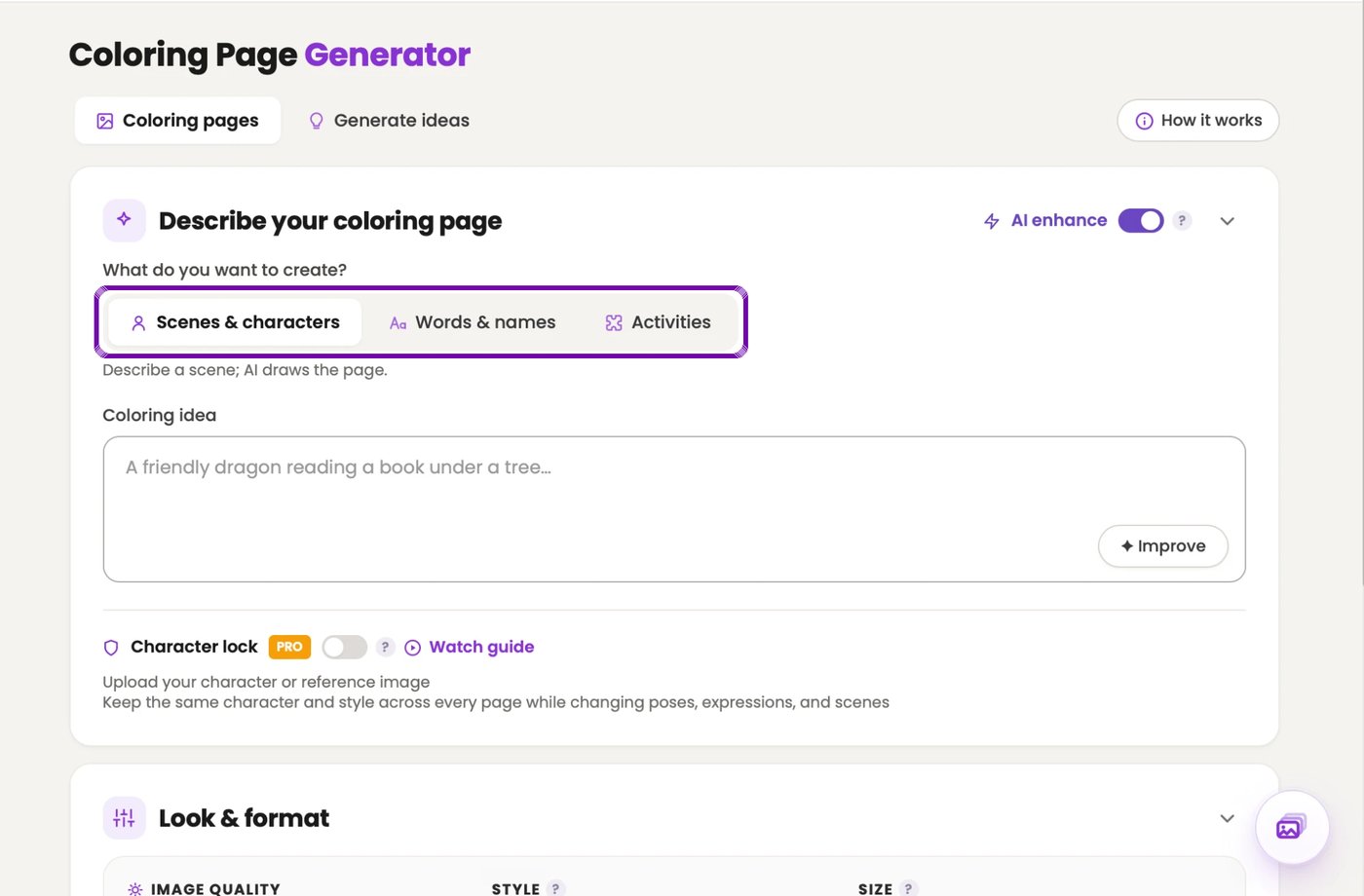
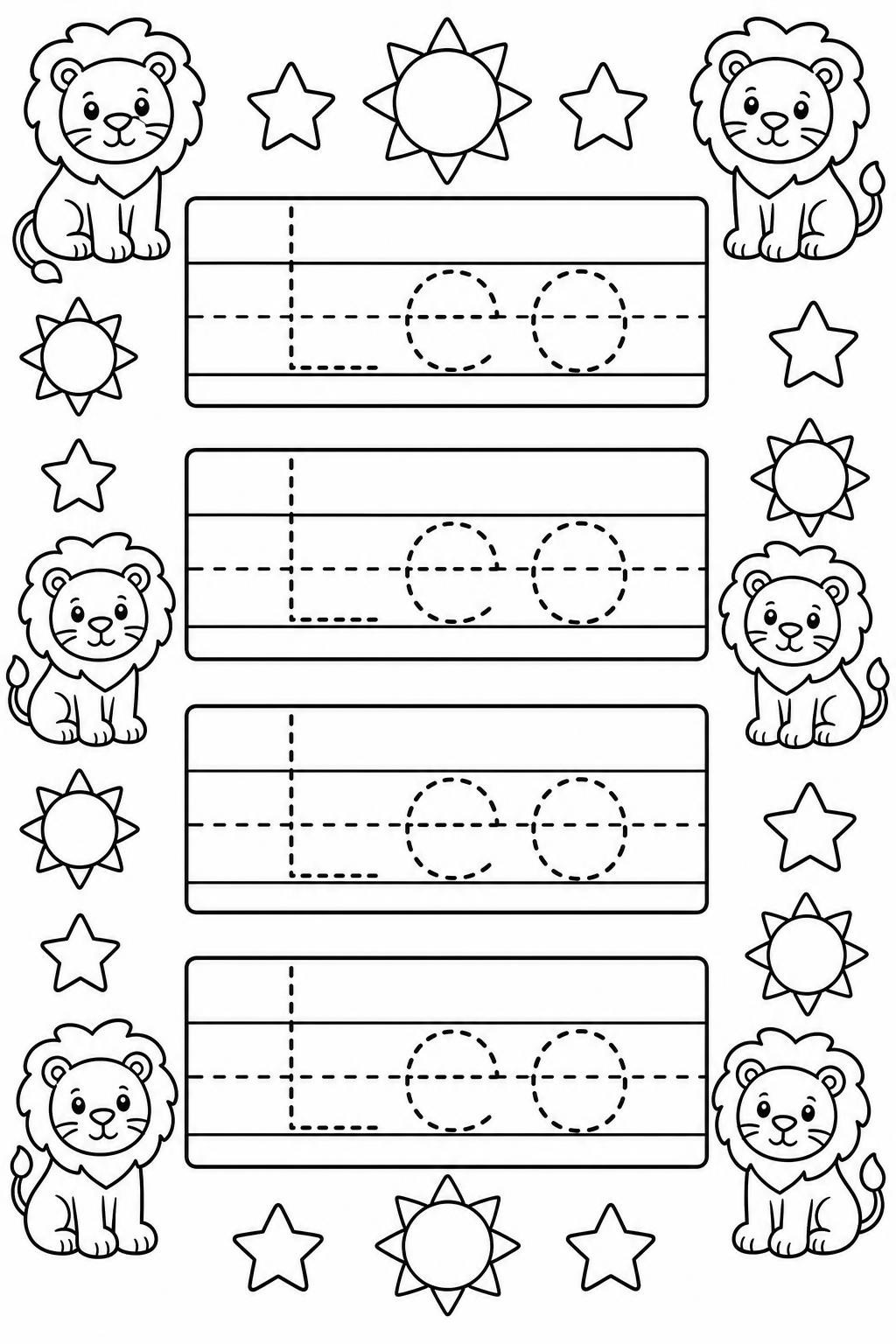
For this sheet, open Activities and leave Tracing selected. Type the name, and in Add drawings write two or three animals or objects the child loves. For Leo, we wrote lions, suns and stars. The name comes out four times in dotted letters, on lines like kindergarten writing paper. Add drawings also works for your theme of the week, like zoo animals. Our name tracing generator takes a name, a word or a short phrase of up to 20 characters.
2. Color the First Letter, Big
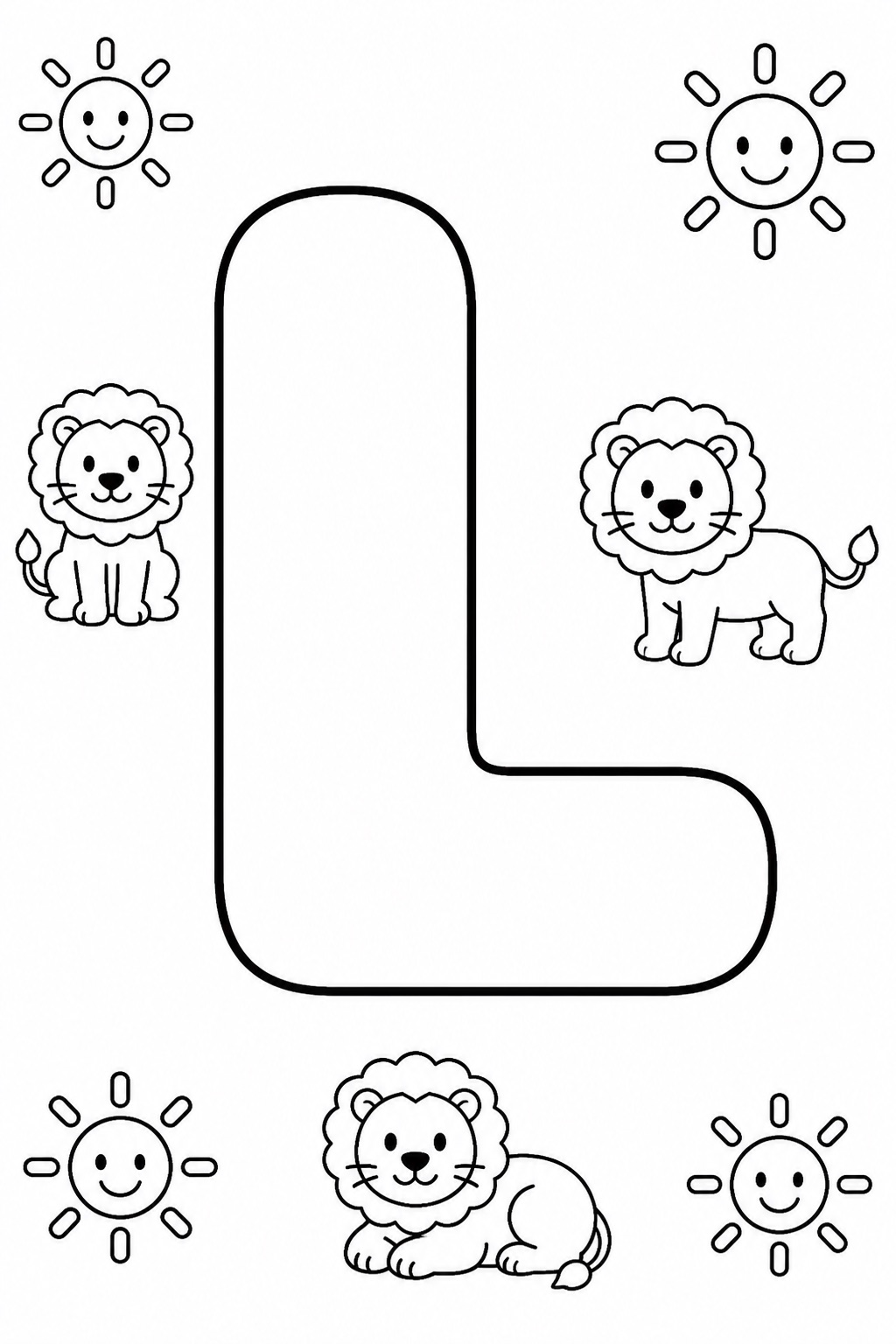
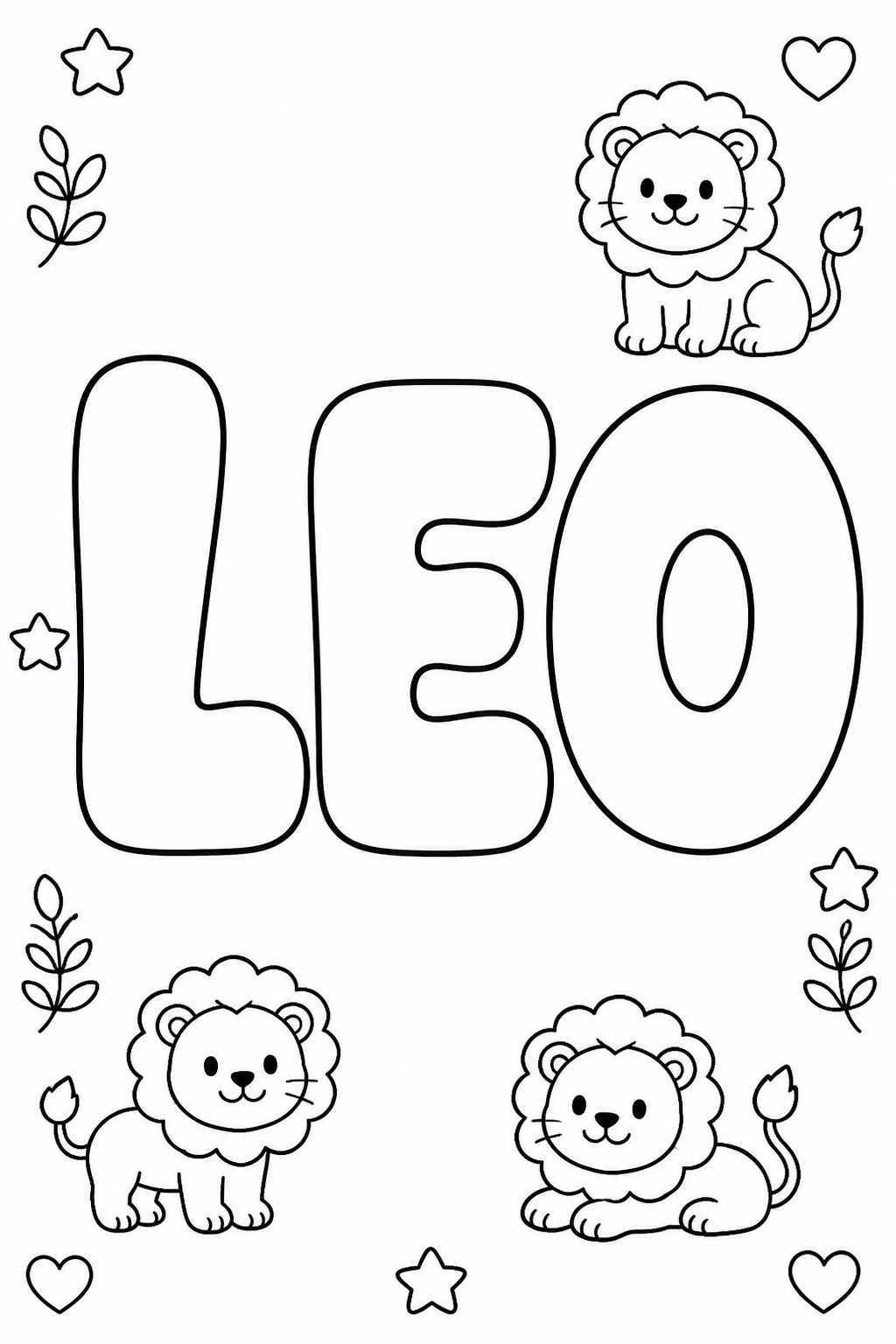
If a child isn't ready to trace yet, start by coloring the letter. While they fill in a giant hollow L, they're looking at its shape the whole time.
In Colorin, go to Words & names and type just the letter. Choose Bubble as the letter style, and write what you want drawn around it. We asked for lions and suns. Set the background detail to Simple so nothing competes with the letter.
For the whole name, use our name coloring page.
3. Build the Name Like a Puzzle
For the puzzle, type the whole name in Words & names and choose Bubble again. We asked for lions around it. Print the page and let the child color it. Then cut the letters apart, mix them up and ask the child to put their name back together. This way they practice the order of the letters, not just their shapes. In a classroom, give each table its own set of names.
- Start with the first letter on the table and the rest in a pile.
- Add one letter from a sibling's or a friend's name, and see if the child can find the one that doesn't belong.
4. Trace One Letter at a Time
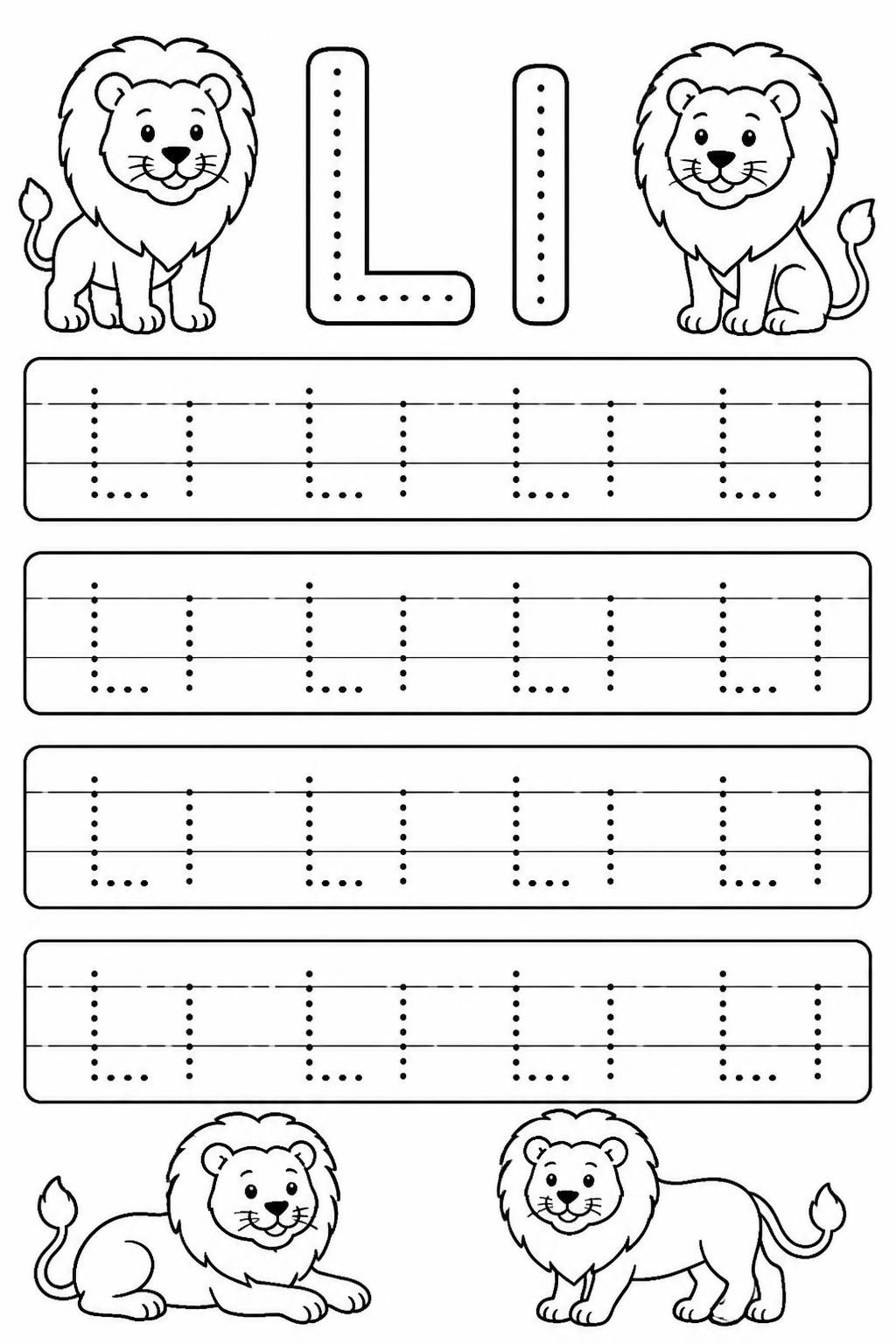
Some children keep writing one letter backwards. Give that letter a page of its own, so the child traces it the right way row after row.
To show the capital and the lowercase together, type both in the Activities tab with a space between them. For L, type L l: a capital L, then a lowercase l. We added lions in Add drawings. The two shapes look different, so seeing them on one page helps the child learn that both are the same letter.
5. Pair the Letter With an Animal, Then Hunt for It
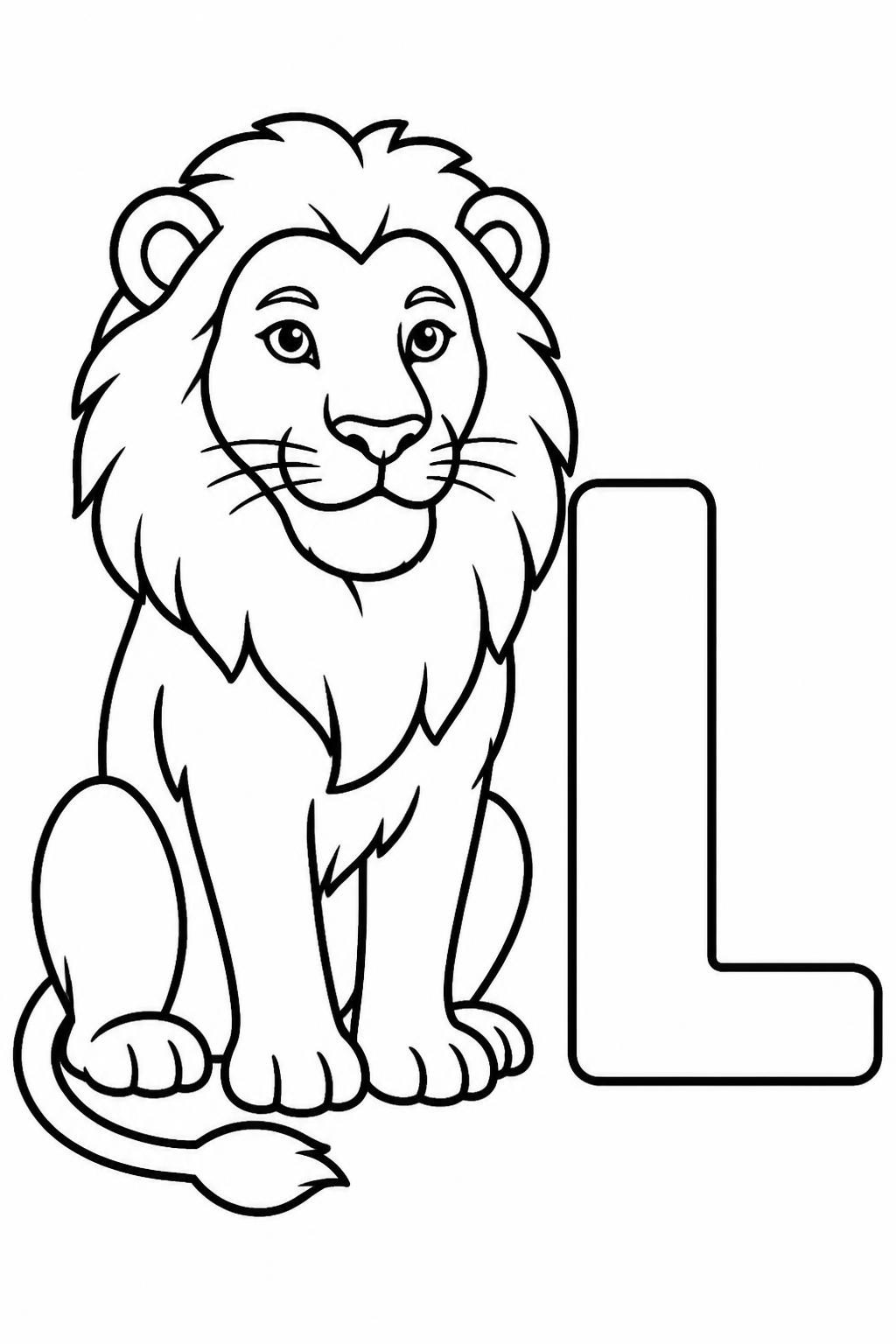
Next, make a page with the letter and an animal whose name starts with it, like a lion for L. This page also brings in the letter's sound, since "lion" starts with the sound L makes. In Scenes & characters, we chose the Minimalist style and typed this, word for word: a big friendly lion sitting next to a large capital letter L, simple coloring page for preschoolers. The child colors the lion and then traces the L with a finger.
Then have the child look for the letter around the house or the classroom. In an eight-week study, parents helped their preschoolers find and write the letters they saw on signs and labels. Those children made clear gains in letter knowledge.
- Give the child one letter and a highlighter, and let them find it on a cereal box.
- Add a second letter from the name once they can find the first one quickly.
6. Move On to Cursive When They're Ready
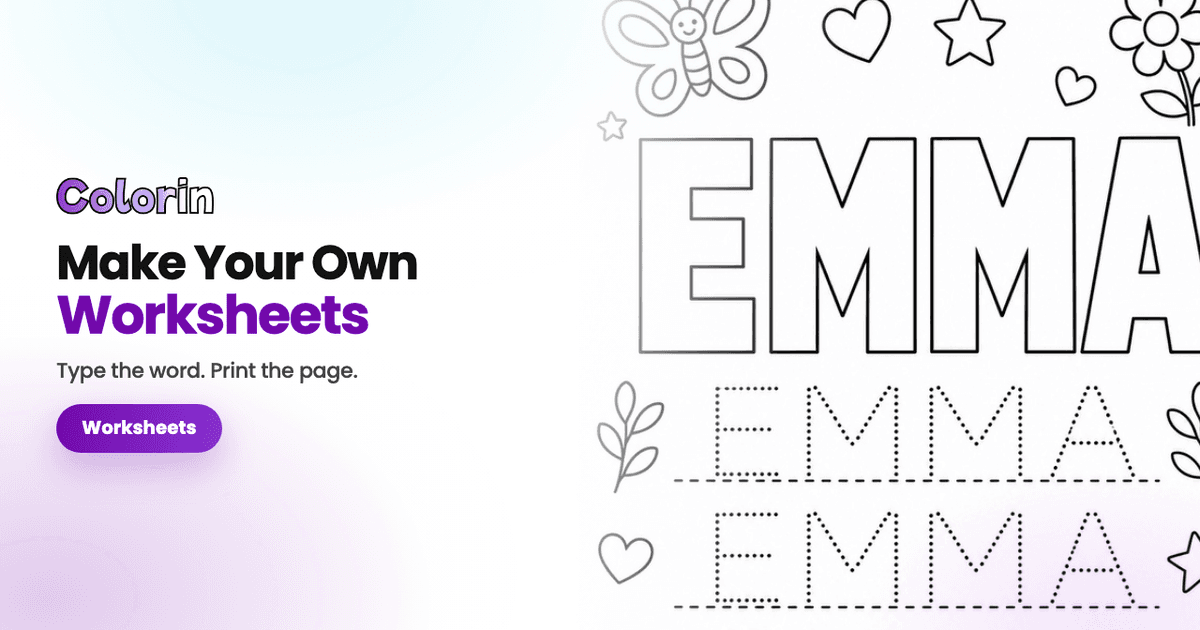
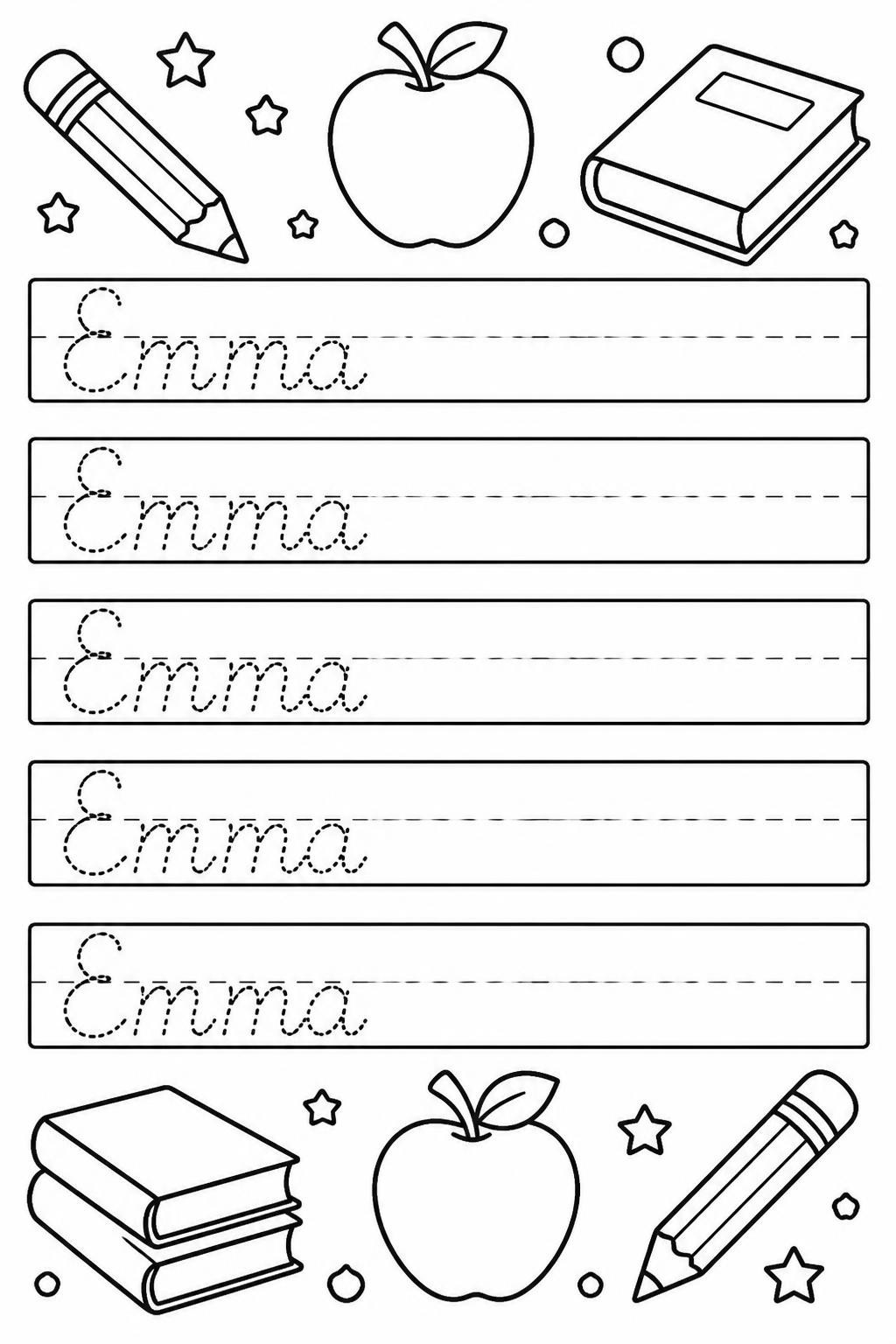
Some kindergarten and homeschool programs start cursive early, and older siblings often want a sheet of their own. In the Activities tab, switch to Cursive Practice and type the name. For Emma, we wrote pencils, apples and books in Add drawings.
Each of the five rows starts with the name in dotted cursive. The child traces the name, then writes it again in the empty part of the row.
7. Make a Sheet for Every Name in the Class
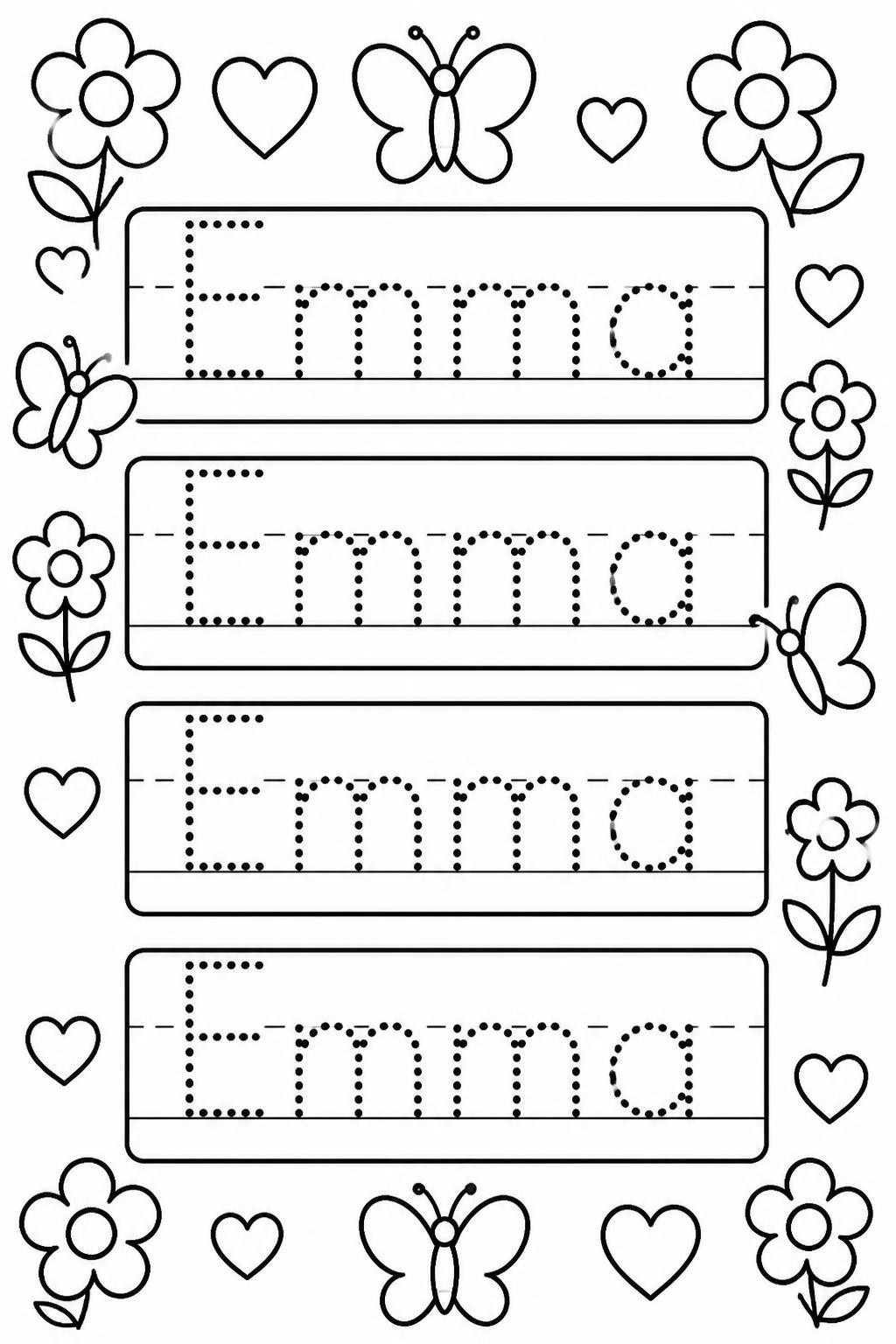
For a class, make one tracing sheet per child. For Emma's sheet, we wrote flowers, butterflies and hearts in Add drawings. Each sheet downloads as a black-and-white PDF, ready to print or copy. A free account refills to 48 credits every 10 days, and a tracing sheet uses 3 of them in Standard quality, the default. That's 16 sheets per refill, so for a class of 18, make 16 today and the last two after the next refill. If you sell printables, you can bundle these same pages for Teachers Pay Teachers or Etsy.
Why the First Letter of Their Name Comes First
Children know the first letter of their own name better than the other letters. A 1998 study by Treiman and Broderick found this in preschoolers, kindergartners and first graders. The authors suggest two likely reasons. Children see their own name more than any other word, and adults often point to its first letter and name it. Children also care about that letter because it's theirs.
In the study, children knew the name of their first letter better than other letter names. They didn't know its sound any better than other sounds. A four-year-old may say "that's an L" and still not know what sound L makes. So teach the sound too.
Most children can write some letters of their name by age 5. Use this rough guide by age, and if a child isn't there yet, start one step earlier:
- Ages 2 to 3: color the big first letter with crayons or dot markers.
- Age 4: trace the name and build the name puzzle.
- Age 5 and up: write the name without dots, then try cursive if their program teaches it.
For more sheets in the same style, see how to make your own worksheets.
Make your first name tracing sheet with the name a child knows best.
Colorin AI is an AI coloring page and coloring book generator for parents, teachers and creators who sell on Amazon KDP and Etsy, with generation from a written prompt or from a photo, character lock for consistency across pages, and print-ready export sized for KDP.
Written by Kisbel Blanco. Published October 6, 2026.