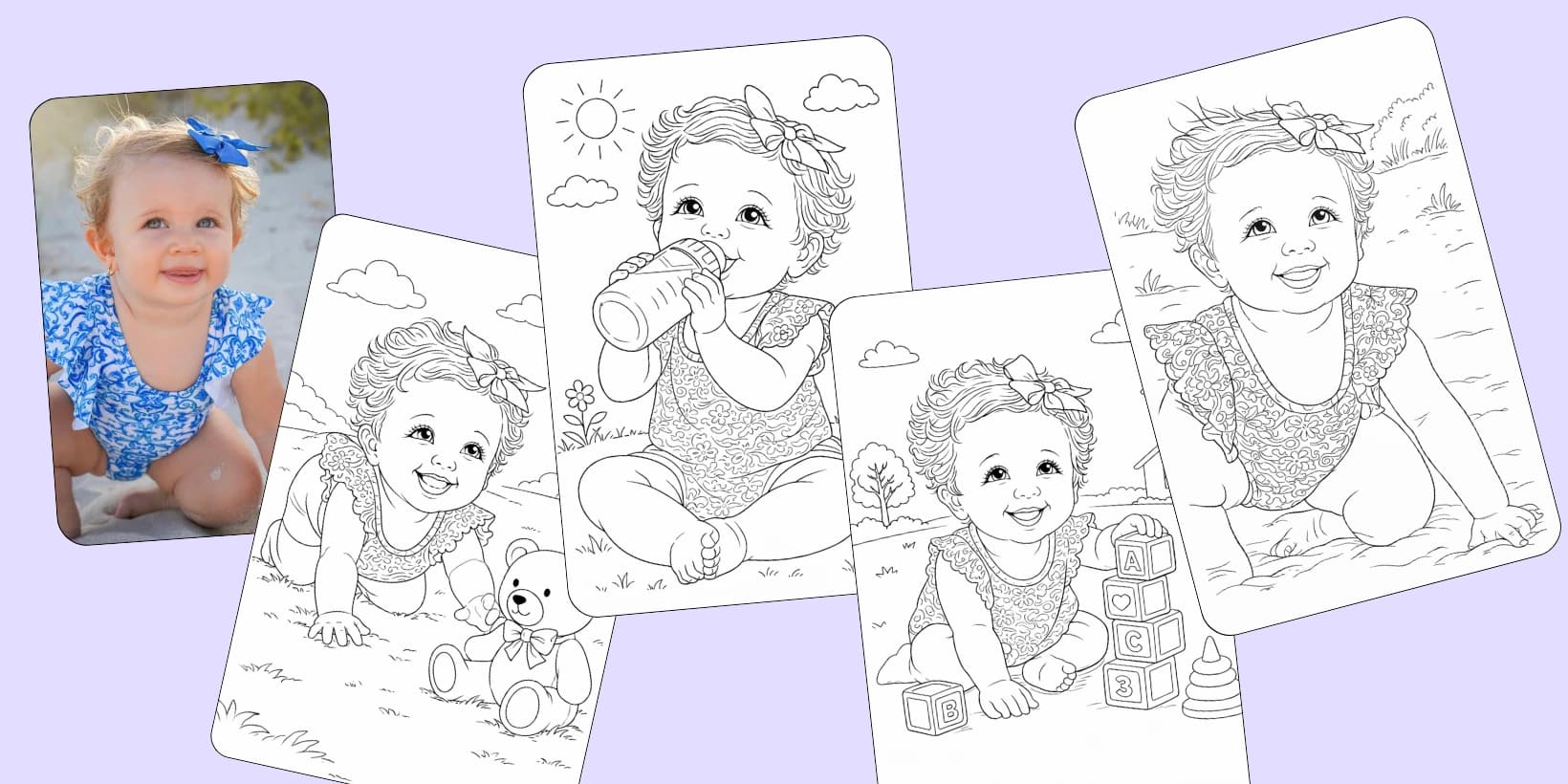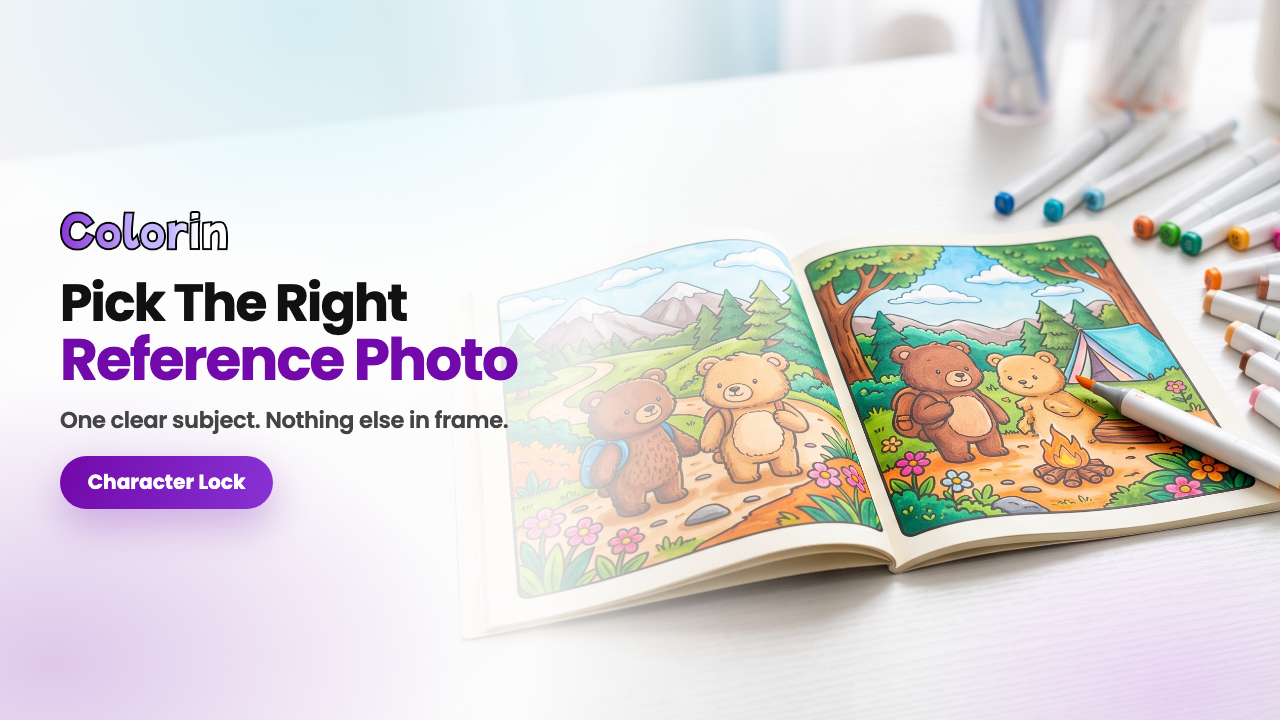
One clear subject, a plain pose, and nothing tangled around it. The generator rebuilds your subject into new scenes from that single photo, so anything crowding it competes for the space. A clean photo is the difference between fifty pages of the same character and fifty pages that drift.
What Are the Three Rules for a Reference Photo?
One clear subject with nothing else in frame, a plain pose, and good light with nothing crossing the subject. Colorin AI is a coloring book generator that keeps the same character on every page of a fifty page book, and it shows those three rules at the moment you ask it to. Each one is there for a reason, and the table below says which.
| The rule | What it prevents |
|---|---|
| Use a simple reference. One clear subject, nothing busy around it | A busy background gets read as part of the subject, and starts showing up in scenes where it makes no sense |
| Use a clean pose. Standing, sitting, or crawling | An unusual pose gets locked in with the character, so every page repeats it whether the scene calls for it or not |
| Give the subject the frame to itself, without bikes, carts or other characters sharing it | The generator cannot tell where your subject ends and the bike begins, so it keeps them together |
The common thread: the photo should carry who the subject is and nothing else. Everything you leave in it, you are asking to see again on every page.
Should You Upload the Photo or the Converted Coloring Page?
Upload the converted coloring page. A raw photo works, but converting it first and starting the book from that drawing gives the generator outlines to copy instead of color and shadow to interpret. This is the step that gets skipped, and it changes the whole book.
The reason is that a photo and a line drawing carry different information. A photo carries color, texture, shadow and depth. A line drawing carries only outline. When what you start from is already a line drawing, the generator is matching outline to outline, which is exactly what it has to reproduce on the next forty-nine pages.
Which Features Stay the Same Across Every Page?
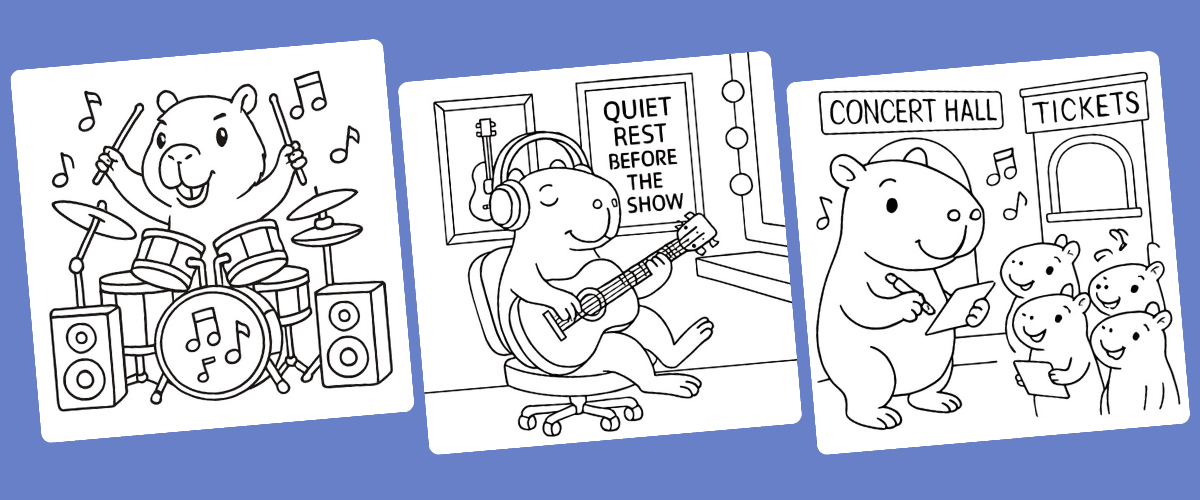
Structural shapes survive; fine detail does not. In a 50 page forest set we published in August 2026, the character held together across every scene on five things: a cone hat, a round nose, a long beard, a belt, and boots. Freckles, hair curl and button counts did not.
Nothing on that list is fine detail. All five read at thumbnail size, and that is the working test: shrink the page to the size of a stamp, and if you still know who it is, the trait is doing its job. If you have to zoom in to recognize the character, that trait will not survive to page thirty.
What does not survive: freckle patterns, the exact curl of hair, the number of buttons on a coat. Asking for those page after page produces drift, not consistency, because there is no stable shape for the generator to hold on to.
How Do You Check a Reference Photo Before Starting?
Four checks, and together they take about a minute. All four test the same thing: whether the photo carries shape rather than fine detail, and whether it carries anything you would not want to see repeated on all fifty pages.
- Shrink it. View it small. If the subject is unrecognizable at that size, the photo is carrying detail instead of shape.
- Name three traits out loud. If you cannot name three, the generator has less to work with than you do.
- Look at what else is in frame. Anything you can point at is something you may see repeated.
- Check the pose. Ask whether this pose makes sense in every scene you plan to write. If it does not, pick a plainer one.
What Is the Next Step After Choosing the Photo?
Converting it, and generating the book from that drawing. Picking the photo is step one of a sequence that ends with a file you can print at home or send to a printer such as Amazon KDP, which prints on cream, white or groundwood stock. The whole sequence is in our guide on how to make a personalized coloring book.
Frequently Asked Questions
Can I use a drawing instead of a photo?
Yes, and it often works better, because a drawing is already line art. What matters is the same either way: one clear subject, a plain pose, and nothing crowding the frame.
What if my only good photo has two people in it?
Crop to one. That is what the third rule is for: one subject in the frame is how the generator knows exactly who the book is about.
Can I change the photo partway through a book?
You can, but treat what comes after as a second section rather than a continuation. A new starting photo means a new baseline, and pages from before and after will not match as closely.
A clean photo is what the rest of the book is built on. Convert your photo into a coloring page first and start the book from that.
Written by Kisbel Blanco. Published August 25, 2026.